
Eggs and so much more.

Some years ago I became fascinated by shopping for groceries in other countries, and even in foreign parts of my own country.
I can stroll the aisles of a new grocery store for three or four times as long as it takes to actually buy the items on my list, just marveling at what’s for sale and how it’s packaged (see photo above). Now that we’re on a constrained budget, of course, we have to be far more concerned with how much things cost.
Lest I keep you in suspense, eggs are a LOT cheaper in Ecuador, which uses the American dollar for currency, making oranges-to-oranges (or cartons-to-cartons) comparisons a cinch. We regularly buy packages of 30 eggs for between $5 and $6. You can pay more for the ova produced in special settings or by exemplary birds of some kind – including quail – but two days ago extra-large brown hen’s eggs, two and half dozen, cost us $7.13. What’s more, they aren’t taking up space in the store’s dairy case; they are stacked on shelves with other non-perishables.
Should we be eating so many eggs? Of course not, but that’s not the point, and we were having people over for brunch.
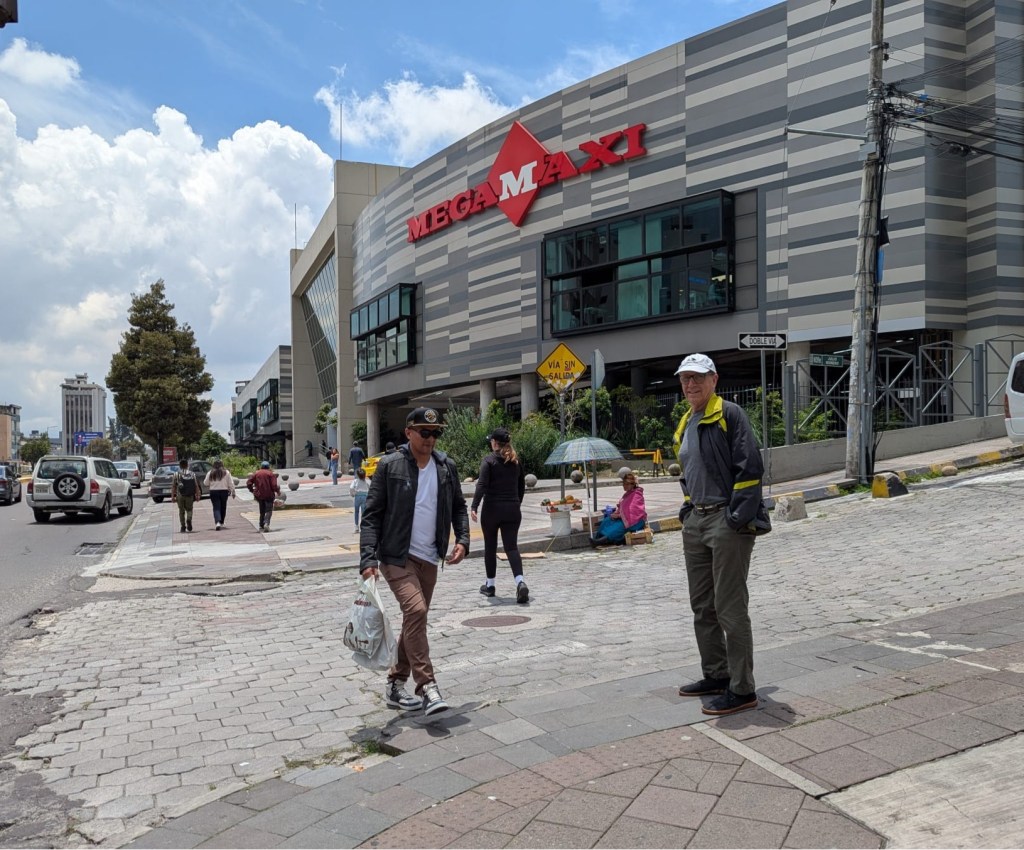
Less than 48 hours after we arrived in Quito in April, our friend and benefactor Sofia took us on our first food-buying trip. Still wigged out from the process of immigrating and unsure of pretty much everything, including how to operate the induction stove in our Airbnb, we were ill-prepared for the sheer size and spectacle of Megamaxi.
And yes, as my sister in law Maria pointed out, the name does sound like a feminine hygiene product, along with its smaller relative Supermaxi. As far as we can tell, whether on heavy days or light days, the Maxis represent the biggest, most lujo grocery chain in the country.

On that Sunday afternoon Megamaxi was crammed with products, staff, and shoppers. Think a Costco-sized cavern without the samples, combined maybe with Best Buy – Megamaxi sells appliances both large and small – and Target-ty aspects for good measure, such as clothes, shoes, bed and bath linens, pillows, makeup, toiletries, and other must-haves for the home. Oh, and automotive, tech, and booze.
But we just needed some food, and we needed to see how and what they sell for food in Ecuador, and then we would figure out how to prepare it.
The older I get, the less interested I am in eating animal flesh, so the abundance of fruit and veg here, with the 12-month growing season and all, is a helluva good thing.
The stuff that costs the most in the U.S. costs the least here. Asparagus is less than $2 for a nice healthy bunch. Broccoli is even cheaper. Avocados are omnipresent (for the record, it is possible to eat too much avocado, I have done it and know) and affordable, as are pineapples and every other kind of “tropical” fruit. Leafy greens and herbs cost pennies.
Tomatoes, however, are awful. I have yet to discover a place to buy vine-ripened tomatoes at any price. At the Maxis, they are all the mealy pinky-red kind we see in the U.S. Charlie stopped by a big outdoor veg market here to ask about heirloom tomatoes and was told, “We don’t grow those here.” There’s something called tree tomatoes, tomate de árbol, which I believe are sweet; we haven’t tried them yet. For now I am making do with cherry tomatoes.

If you want a can of tomatoes – and let’s face it, sometimes a girl just needs that good metallic taste, or is making a recipe that benefits from it – it will set you back. A 14-ounce can of Hunt’s costs nearly $5. Fortunately an alternative, produced in Italy, costs only $2.31 per can.
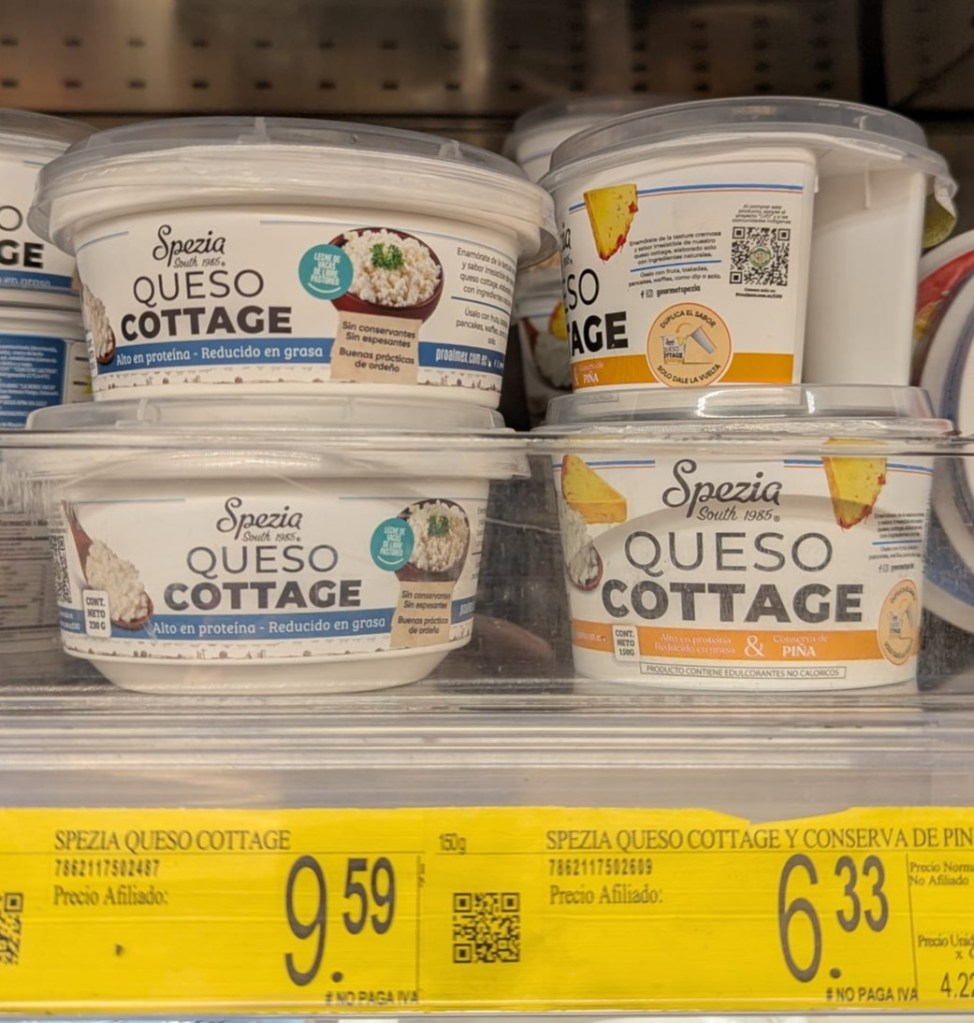
A cup or so of cottage cheese costs close to $10. Natural sweeteners like honey and maple syrup (imported, natch) seem pricey to me.
I should confess here that since just before the pandemic, and even when it capitulated to the forces of evil, Target was my go-to for groceries in the states.
One, I liked its delivery service; no need to stroll the aisles there because they’re all alike, all the time. I’ve even had to slap myself in a Target once or twice to try to remember which one I was in.
Two, Bill is a Target retiree and between that and a debit-card discount, we got at least 15% off on every purchase, with extra discounts on fruit and veg, which were uniformly lousy, but still.
The most expensive single item on my last Quito grocery bill, at a Supermaxi down the hill from our apartment (not to be confused with the Supermaxi up the hill from our apartment), was a nine-pound bag of Purina Dog Chow, which cost $15.30. The next most pricey item was 12 ounces of coffee for $8.91.
Clearly, we have our priorities in order.



 Report from Quito
Leave a reply to dreamilyb2d116d188 Cancel reply