
And then another.
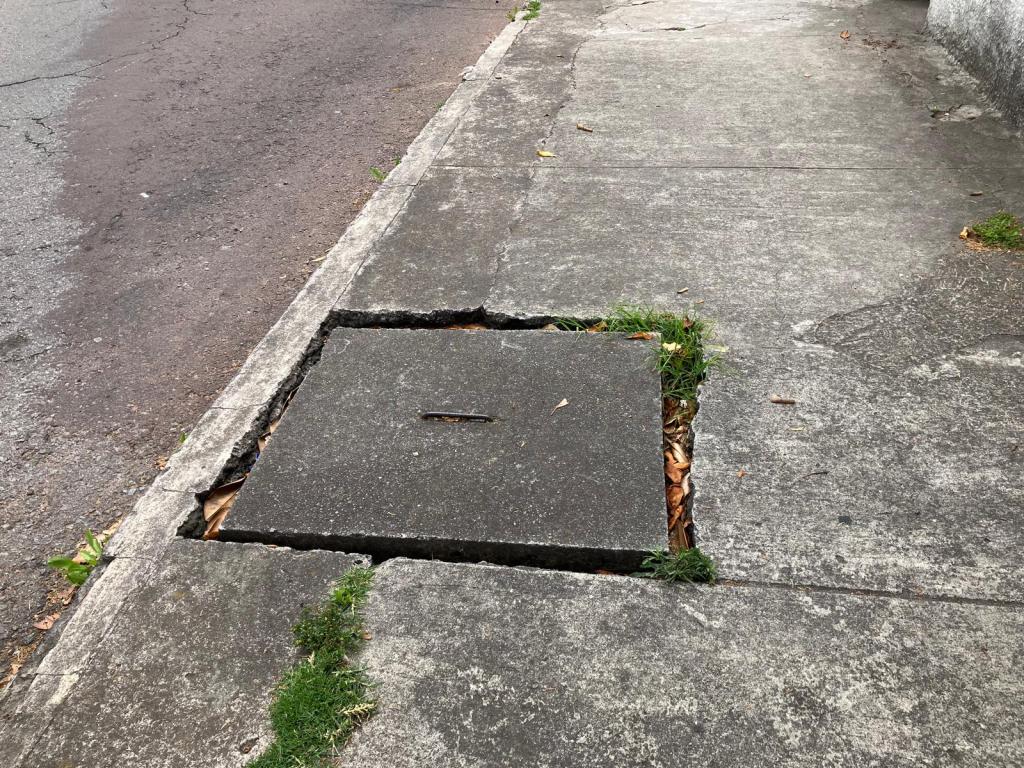
When we arrived in Quito in April and began to explore the neighborhood around our Airbnb, it didn’t take us long to discover that walking here is a blood sport. The sidewalks are minefields of heaved or uneven concrete, holes where PVC pipes might once have been, craters that could swallow a small pet, moss, bags of garbage, trees or shrubs planted in surprising places – if you can trip over it, fall into it, or slip on it, you’ll find it on a Quito sidewalk.
And curb cuts? As my mother often said, always with contempt, “it is to laugh.”

In late 2013 I came home from Target with some plastic storage bins. I am embarrassed to admit how excited I was to have gotten them, or that in my retail-induced euphoria I skipped down the basement stairs a little too quickly and missed a couple at the bottom. It was a tiny little fracture of my left ankle; I got an ankle brace and a stick to help me navigate, and two weeks later I went on a planned trip to Italy. The brutal plantar fasciitis in the other foot came later.
That was the last time I fell until I moved to Quito. So far I’ve hit the concrete three times, always within steps of our apartment — and our street is better than many. Last week’s fall was the worst so far.
Bill had gone for a bike ride in the morning instead of taking Bella the dog to the park for her usual recreation. Naturally I felt sorry for her, so in midafternoon I saddled her up and off we went, looking forward to 20 minutes or so of the compulsive fetching that seems to be her reason to live. We hadn’t gone far, though, when my feet tangled up and I went down hard, my glasses flying out in front of me on the sidewalk. I crashed on my knees in an ugly heap, with much of my weight on my left hand.
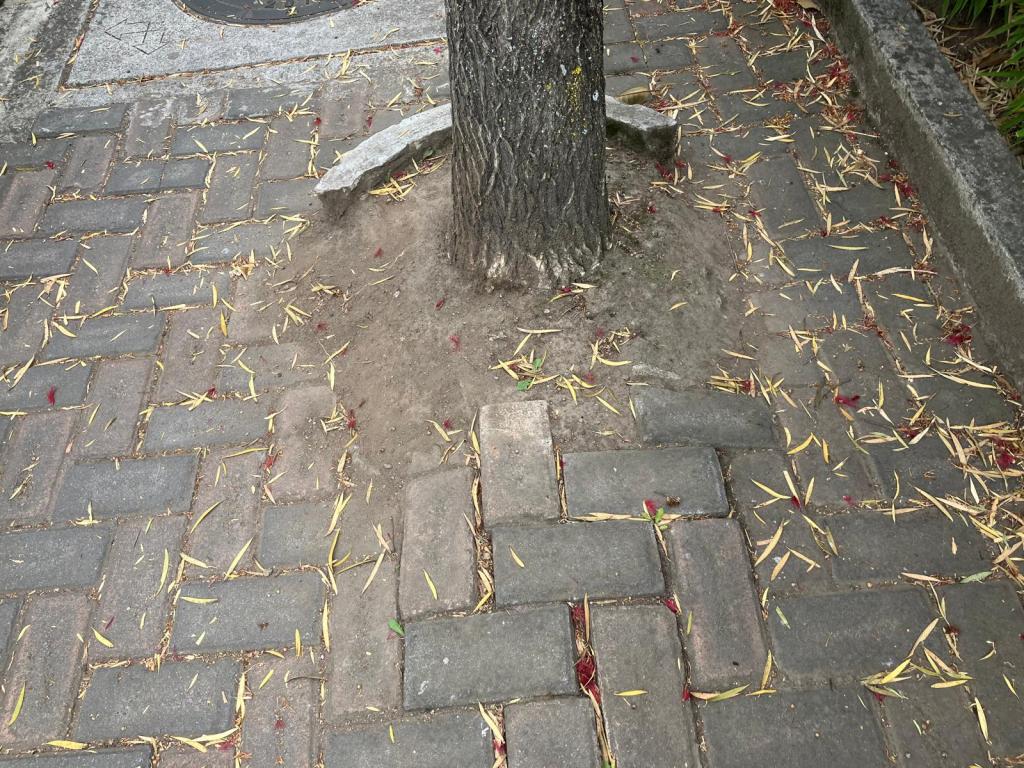
If you’re not badly hurt you feel so stupid at a moment like this. Startled. Embarrassed. “What the hell did I just do – again?” I looked at my left hand and felt something else: alarmed. A person’s thumb doesn’t usually point in the same direction as her fingers, but last week my left thumb was strangely well aligned with the other fingers on my hand. This, I knew, was not a good thing.
My fall was gruesome enough to cause two passers-by to stop to help. The first was an older woman who got out of the car she was riding in and came to check on me. The second was a man who pulled up on the street next to me and actually hoisted me to my feet before hopping back in his car and driving on.
The first samaritan was talking both to me and to the driver of the car she’d gotten out of, who drove along next to us and offered a stream of suggestions and concern as I limped back to our front gate, Bella still in tow. I assured them I could walk, but showed them my left hand and said shakily, “Yo tengo un problema.” I asked if I should go to Metropolitano Hospital, and the woman helping me said to go to Axxis Hospital.

Yes, I think Axxis is a strange name for a hospital too.
Thanking them both, I went in at the gate to our building and upstairs. I unleashed Bella and called out to Bill: “I fell and hurt myself.” To which he responded, “I should be the one to walk the dog from now on.” This made me cry.
I was still crying when our Uber arrived at Axxis Hospital, to which we could have walked had we been willing to risk further carnage on the sidewalks. It was a Sunday afternoon on a long holiday weekend (“El primer grito de la independencia,” or “the first cry of independence”), and there was nobody else in the ER. No fireworks injuries, no gunshot wounds. The intake person told Bill to wait and walked me back to the medical personnel.
The place was windowless, spotless, and painted pale yellow. Two young people, a man and a woman, asked for my information in Spanish; I had been weeping (for other reasons) as I told them I was sorry but I didn’t speak much of their language, and I think they felt sorry for me. In an intake room they had me step on a scale, used a forehead thermometer, and took my blood pressure. They asked how old I was and if I’d had any operaciones. Then they put me in a private cubicle. I felt cared for and safe. Bill was allowed back to wait with me.
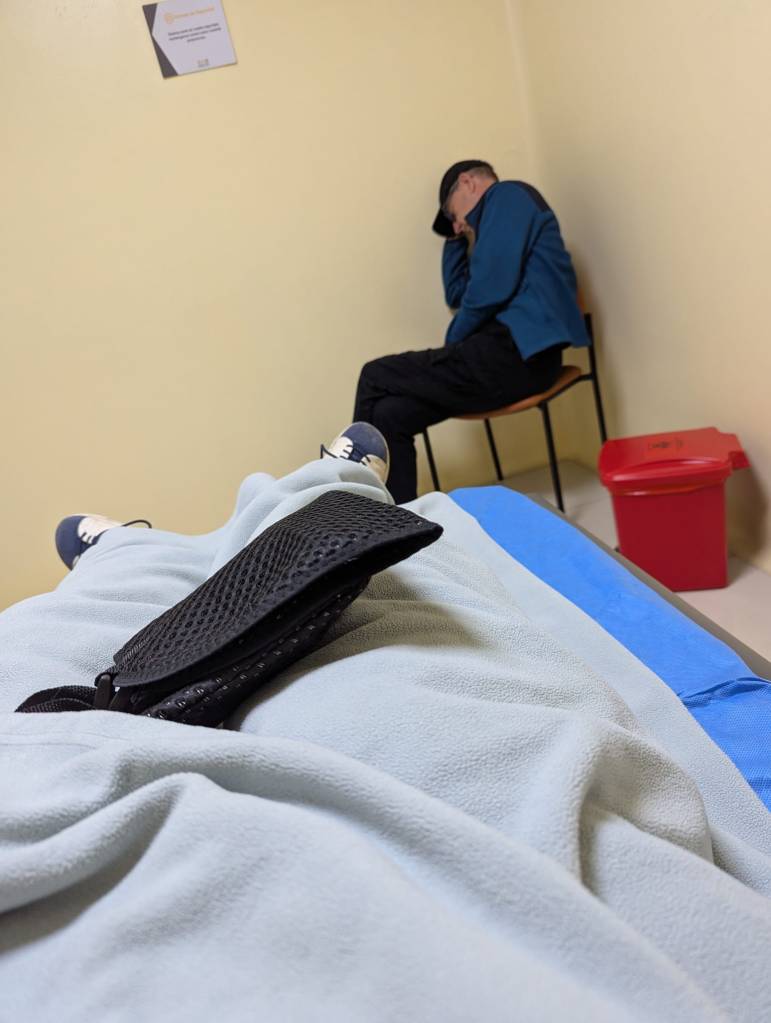
Before long a young man arrived with a wheelchair, took me to x-ray, and brought me back to my little room. After 90 minutes more, Dr. Andres Velasco came in and asked, “Qué pasa?” He spoke more English than anyone I’d met yet, and he told me I had a dislocated thumb. He manipulated my left forearm and said I’d need an elbow x-ray too, after he had put my thumb joint back where it belonged – which he proceeded to do, after a couple of painful injections and with the participation of three young people who were training in emergencia.
After the procedure, which took some 30 seconds, two of the trainees wheeled me back to x-ray, where I noticed the technician looked like a young Andrea Bocelli. I tried to chat with my chauffeurs. Did they live in Quito? No. How long was their commute? An hour and a half. It barely qualified as small talk but it was the best I could do.
Back in my cubicle, Dr. Velasco showed me three x-ray images: the first was of my dislocated thumb joint, the second of the newly realigned joint, and the third of a barely perceptible fracture in my elbow. I would not need surgery; I would have to keep everything immobile for a couple weeks. Then I’d have physical therapy. He would see me again on Thursday.
I was given a sling for my left arm, paid the bill with a credit card, and went home.
There may be some interest in the cost of the visit, whether we have medical insurance, what it covers and so on, and I will address that at the end of this post. The most important upshots of this experience for me were that my care was good, the facility comparable to – and in some ways better than – what we’d been used to at North Memorial in Robbinsdale, and the people couldn’t have been kinder. They include the two strangers who stopped in their tracks on a Sunday afternoon to assist me within seconds of my accident.
Monday and Tuesday I laid low, thinking about oncoming mortality and everything I’d ever heard about how people die after falls. I was sore and a little blue. Wednesday morning, after eating some leftover store-bought quiche, I was overcome with nausea and had to lie very, very still. I took anti-nausea meds and Xanax and managed to sleep that night.
On Thursday I felt cruddy again but went back to Axxis Hospital to see Dr. Velasco for my follow-up. He has a sparkling, busy suite on the third floor and called me in. As he manipulated my left thumb – which didn’t hurt much – I told him that apart from the hand and elbow injuries, I felt like something the cat had in the alley last night (not my exact words). He said my malaise had nothing to do with my injury; maybe I had the flu? He ordered 10 sessions of physical therapy, which I could schedule on the first floor of the hospital.
Bill and I went down to the first floor and the office of Medical Track, the PT provider. I handed Bill the orders from Dr. Velasco and asked him to make the arrangements, because I had to sit down. A few people were waiting, and there were two people behind the front desk. It was one of the nicest, cleanest waiting rooms I could remember having seen in my life. I contemplated the disruption I would cause in that lovely room by being sick. Yet the bottom was dropping out of my stomach and swallowing was getting harder.

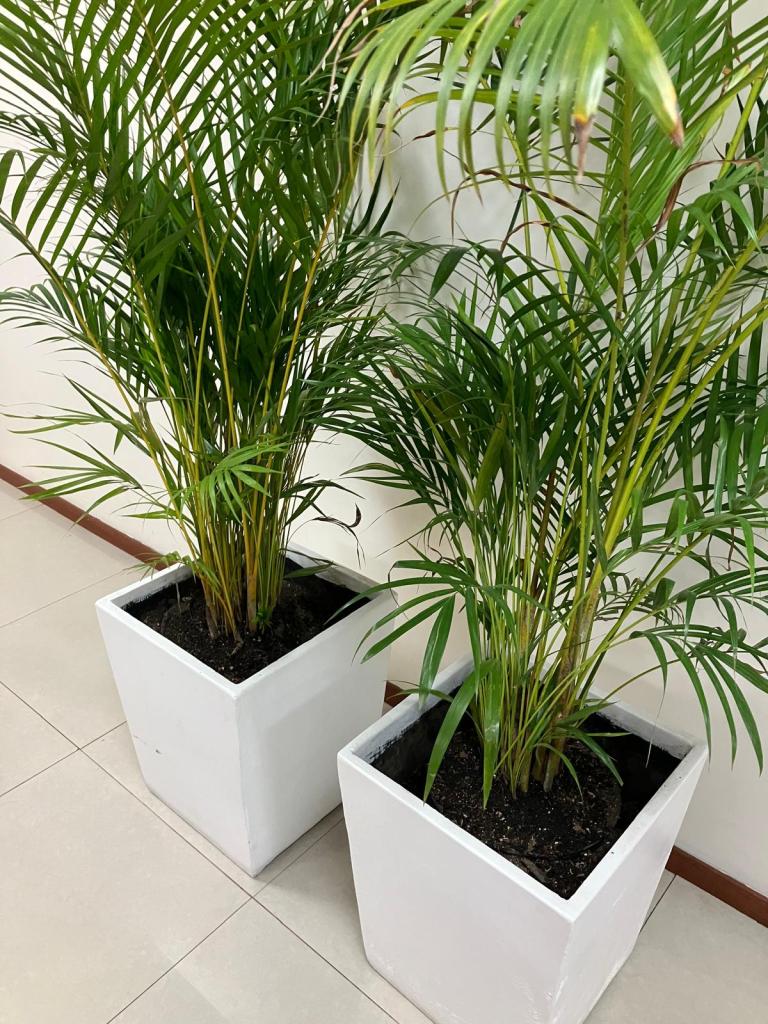
I stood up and went into the elevator lobby, separated from Medical Track by a glass wall and door. I saw no trash receptacles, just a small, wall-mounted can between the two elevators, big enough for a few gum wrappers. Then I noticed the two potted palm trees opposite the elevators. I caught Bill’s eye through the glass wall of Medical Track and made a gesture he couldn’t mistake.
Kneeling at the Altar of the Palm Trees I barfed, generously and repeatedly, into the pot closest to me.

Humiliated again, in public, on a shiny white floor. “Lo siento,” I said over and over. I’m sorry.
Eventually I was taken back to the ER, given some hydration and an anti-emetic. Feeling better, I paid the bill and went home. It may have been the quiche or something else I ate. I’m pretty sure it was unrelated to my wipeout on the sidewalk.
A note on costs
Our travel insurance ended on July 31. Our private Ecuadorian health insurance began the next day – with a 30-day waiting period. The full retail cost of my first ER visit came to $725. I sent the invoice to our insurance agent, Alex. She doesn’t think we’ll receive any reimbursement, but she submitted a claim anyway because my injury was accidental. There’s not much point in submitting the $200+ bill for the second ER visit; our insurance has already declined a copay for my 10 sessions of PT, which will cost $275.
One thing we didn’t know about private insurance, and possibly also public insurance, in Ecuador is that a two-year waiting period for pre-existing conditions is mandated by law. This sucks; our pre-existing conditions include bladder cancer and heart disease. Assuming we avoid a recurrence of those ailments for the next two years, coverage beginning in the third year is limited to something like $10,000 per person – and frankly I’m not sure if that’s annual or a lifetime maximum. We continue to maintain our Medicare Part B and Advantage plans in case the worst happens and we need to travel stateside for medical care.

 Report from Quito
Leave a reply to dreamilyb2d116d188 Cancel reply