
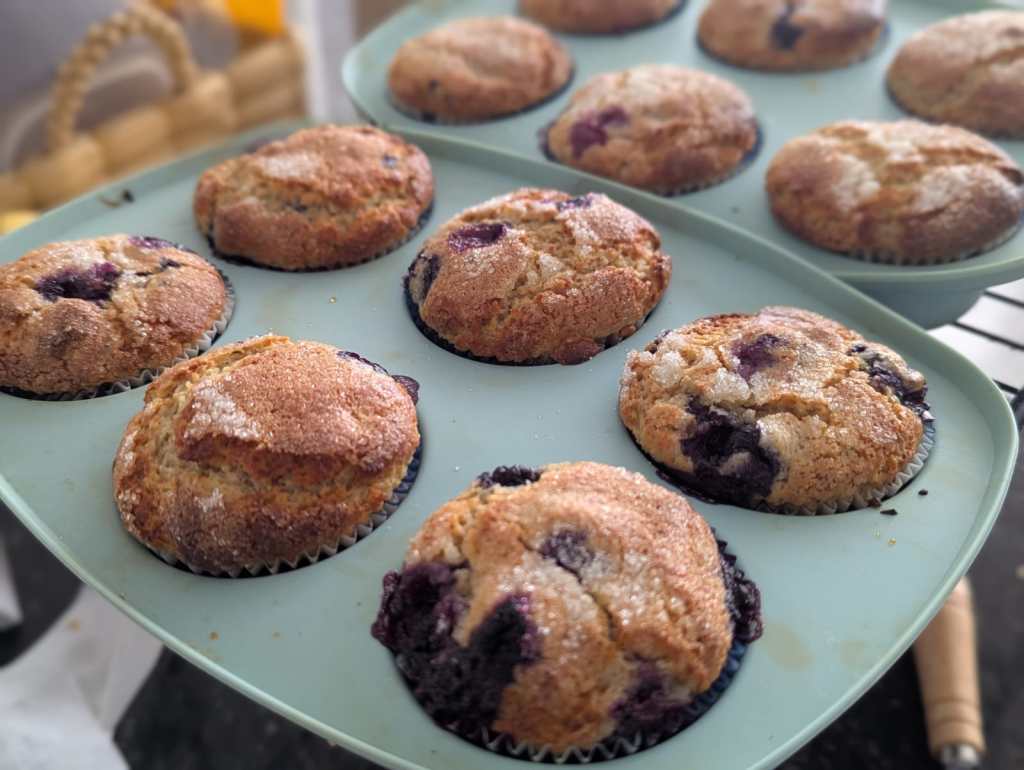
My muffins are getting puffier.
We’re coming up on a year in Ecuador. Apart from our family and friends in the U.S. – and inspiring days of unity like the recent No Kings rally – we don’t miss all that much about our old life.
We’re finding a routine in Quito that includes activities at home and out in the neighborhood. Once or twice a week we meet up at the park with people and dogs we know. We’ve hosted friends, and friends have hosted us. Last week we returned to La Casa de la Musica, a charming venue, for a suitably lugubrious performance of the Mozart requiem. We have a gym, our various grocery stores, the neighborhood mall. It’s relatively uneventful and I’m fine with that.
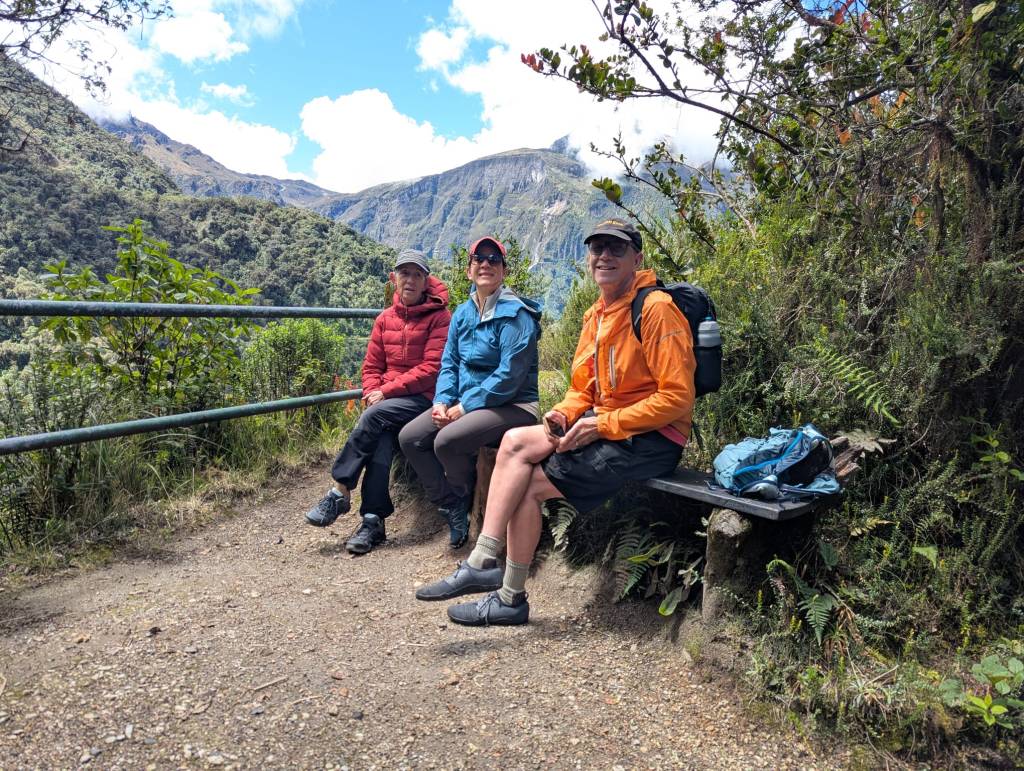
Our friends Mercedes and Sofia take us for a hike in Yanacocha Reserve.
What we don’t know about Quito – which is mostly everything – doesn’t hurt us, cozy in our bubble of privilege. I’m fine with that too, at least for now.
Herewith a look at some of the differences between our old and new lives that are of marginal interest, at least to us.
On a personal level
I’ve reduced my dose of Lexapro, an antidepressant, to 25% of what I was taking before we moved. I’m about to phase out an anti-anxiety med entirely. I attribute this to no longer having to work at what I didn’t enjoy; better food; more exercise; spring weather year-around; not living in a country whose leaders each day bring fresh degradation, embarrassment and rage. We keep up on U.S. news and feel shame, but being physically removed from the stress is undeniably salubrious.
Drugs: not just for cartels
Anyone here can go to a pharmacy and purchase drugs that are prescription-only in the U.S. (but not Xanax or Ambien, don’t ask me how I know). When our friends Bonnie and Phil visited in October, they stocked up on several medications in case their return trip was delayed.
Pharmacies are on just about every block. You ask for what you want, and the pharmacist gives it to you in a branded box, usually of 30 pills. Even if you have a prescription from your doctor, dosing instructions don’t come with the pills, so you have to know how much to take and when to take it. This is great, if you’ve got your wits about you.
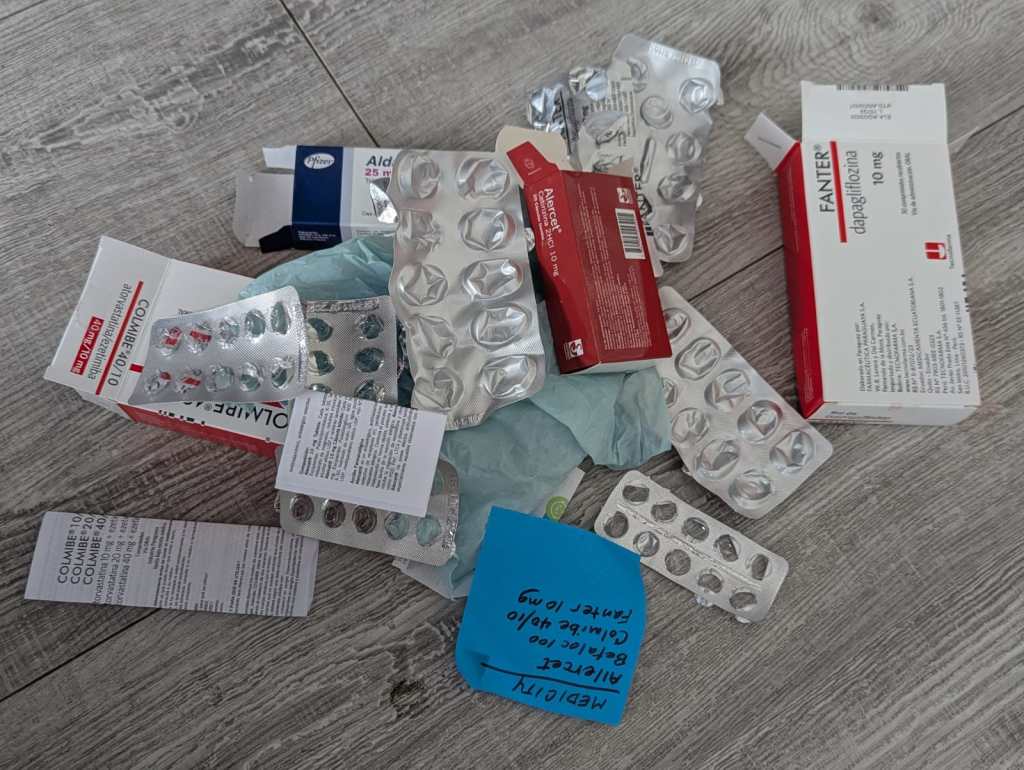
I believe I still have mine, and every two weeks I sit down to open all the little boxes with their blister packs of pills and dole out morning and evening medications for the coming fortnight. (As a heart patient, I take a lot of pills; I created a wee spreadsheet to help me track them as I fill my color-coded containers.) I add substantially to the landfill with my empty blister packs; see image above.
If you present a prescription to the pharmacist, they can bill your health insurance for much of the cost. If you don’t, you still get the meds but you pay retail. For me it’s the difference between $15 and $160 per month. Only in the last month did I learn that insurance pays for your drugs only when you show your prescription, which you get to keep and bring in again the next time.
Plastic and popo
You can’t flush toilet paper in Quito or in any other part of Ecuador. We also couldn’t flush it in Chile or Costa Rica, where we’ve been on vacation. This means that you regularly look at your own poo, or other people’s poo, or other people’s menstrual blood, etc. I have trained myself not to look.
Soiled papel higiénico goes into a receptacle in every home and commercial bathroom, which is usually and mercifully lined with a bag, always plastic. Ergo, billions of plastic shit bags go in the country’s garbage; we have no idea where it ends up. In Costa Rica, we stayed at a certified B corporation yoga/surfing camp where the used TP was composted and spread in the garden. Whatever their salary, the gardener there didn’t make enough.
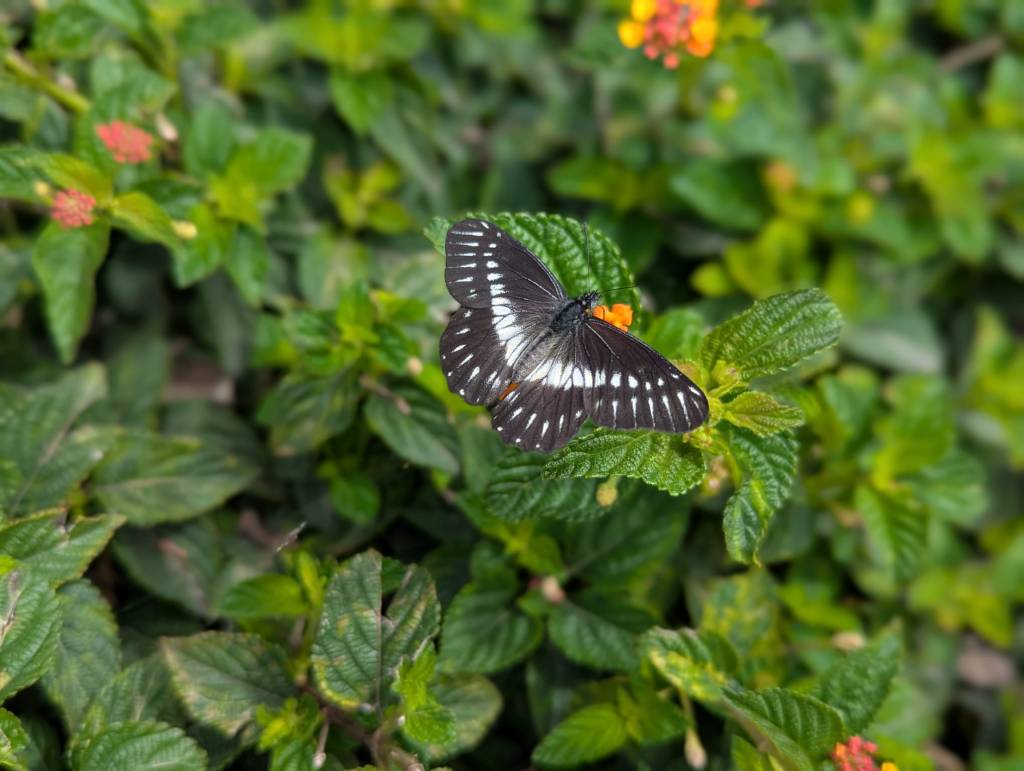
We encounter a huge amount of plastic in our daily life. While certain items are collected along with the garbage, we don’t know where they take what they collect or how – if – it ends up being made into something.
Cierra la puta boca
Nobody seems to use lawnmowers around here. Instead of the low droning tones of mowing, we hear the high whine of weed whackers wielded like weapons by slowly advancing platoons of men on the green spaces of the Japanese embassy and the long park where we take the dog. This provides work to more people, I guess, and maybe weed whackers are cheaper to operate.
The gas truck trolls around the streets playing a weird cheery tune through its loudspeakers. Likewise junk collectors who buy old appliances and such. Noise ordinances? It is to laugh. We don’t need to buy gas, so we just hum along with the tune. Now and again one comes by playing “La donna e’ mobile,” always a good day.
And then there are the dogs.
Table manners
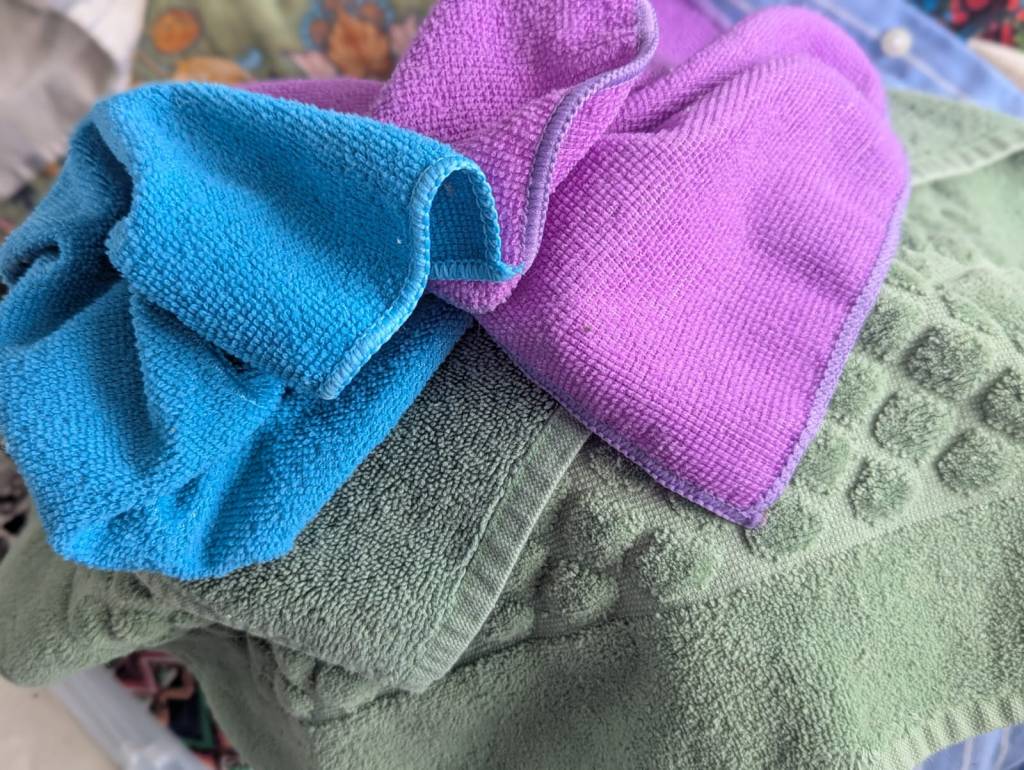
Spring colors in the laundry.
Ecuadorians are a clean people. I have never seen local citizens with food dribbled down their shirts. Yet when you go out, even for a full sit-down meal, you’re lucky to get a teeny tiny paper napkin. At fast-food joints you don’t see napkin dispensers begging to be relieved of their contents by people like me (because you never know when you’ll need a wad of absorbent paper, am I right?). We’ve been to a few restaurants with cloth napkins, but most of those were unpleasant-feeling polyester.
It’s tough to find cloth napkins to buy here, too. If you do find them, they’re costly and usually pretty dull. Bright colors are not apparently a feature of retail, middle class Ecuadorian home decor. This week I saw some Easter decorations that were made out of brown kraft paper. Don’t they like pastels here?
Bed linens are wildly more expensive in Ecuador than in the U.S., to the extent that it costs less to pay a mule to bring a set of cotton sateen sheets from the homeland (at $8 or $9/pound) than to buy a set of similar quality here. A polyester comforter costs three times as much in Quito as it would at Target.
Driving
We are happy not to have a car here, although I still miss being able to run a simple errand whenever the mood hits. Only it wouldn’t be simple here because of the likelihood of getting creamed in traffic. We’ve had good talks, in simple Spanish and sometimes in English, with almost all of our Uber and taxi drivers. The cost of paying others to drive us around pales in comparison to what we spent on our cars and auto insurance in the U.S., or would be paying here if we felt it necessary to own a vehicle. The only downside is that far too many vehicles don’t have working seatbelts. I’ve often ridden without restraint . . . much like the tots carried on laps in the front seats of cars and motorcycles.
Nobody talks about the weather
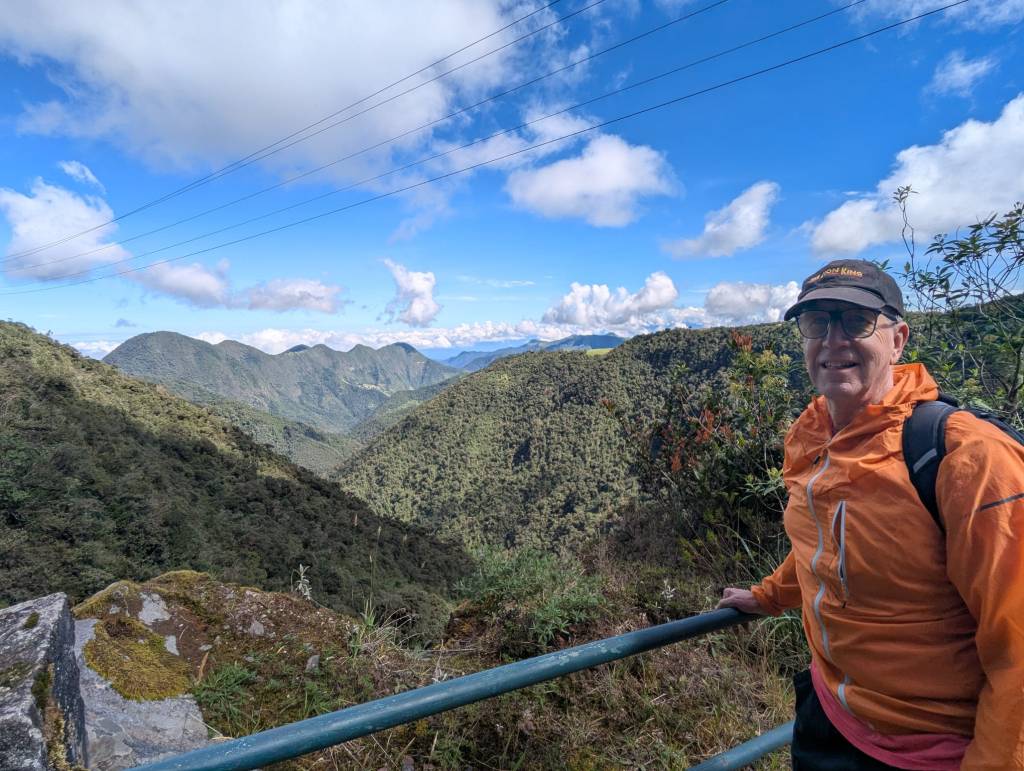
Because there’s no point: it’s always a mixture of rain and sun and a scary UV index, high temp between 60 and 70 degrees Fahrenheit. I personally miss the fascination of Upper Midwest forecasts; after 40 years I had come to understand something about arctic clippers and the high pressure systems that always followed a dump of snow.
You’ve got no mail
Because there’s no postal service. In the U.S. I received almost nothing of interest, apart from the very occasional letter from my English penpal. But I still miss the mail.
We have no idea how long we will stay in Ecuador, or where we would go (other than the U.S., which feels less and less plausible) if we needed to leave for some reason. We’re visiting Peru in June – Machu Picchu, don’t you know, and the culinary mecca of Lima – so that may give us some ideas.
After a year as immigrants, and with gratitude for the many Ecuadorians who have eased our way, we are settling in.
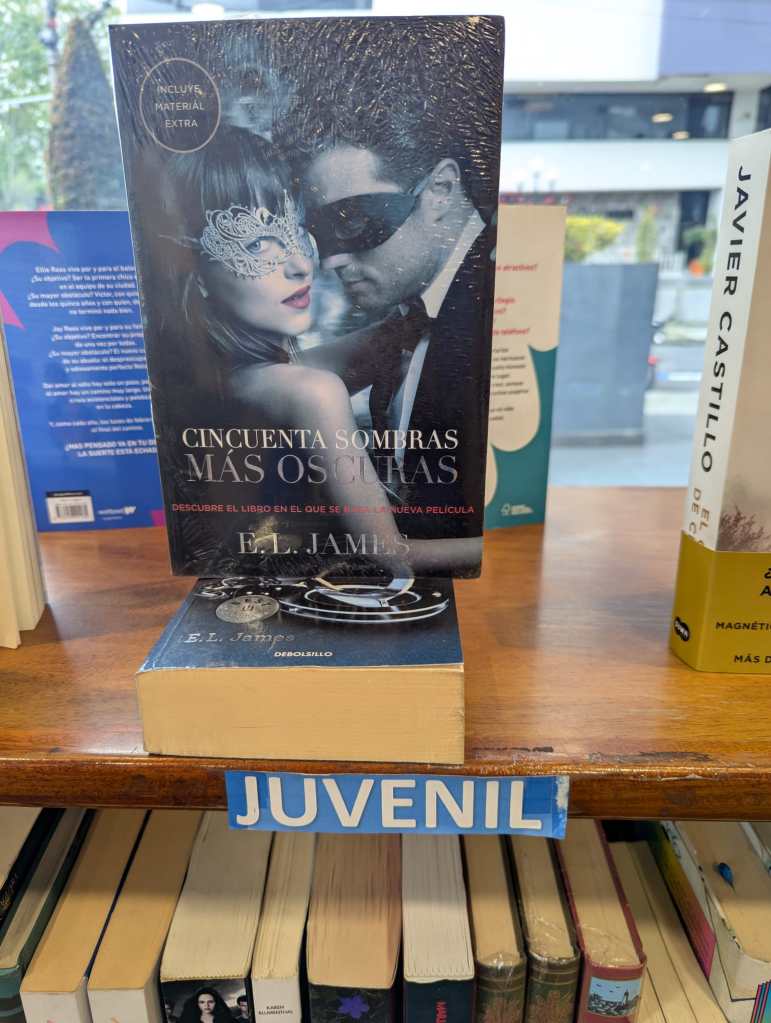
The youth-focused bookstore seems to have mis-shelved this one.

 Report from Quito
Leave a reply to GARY VAN DER STEUR Cancel reply