
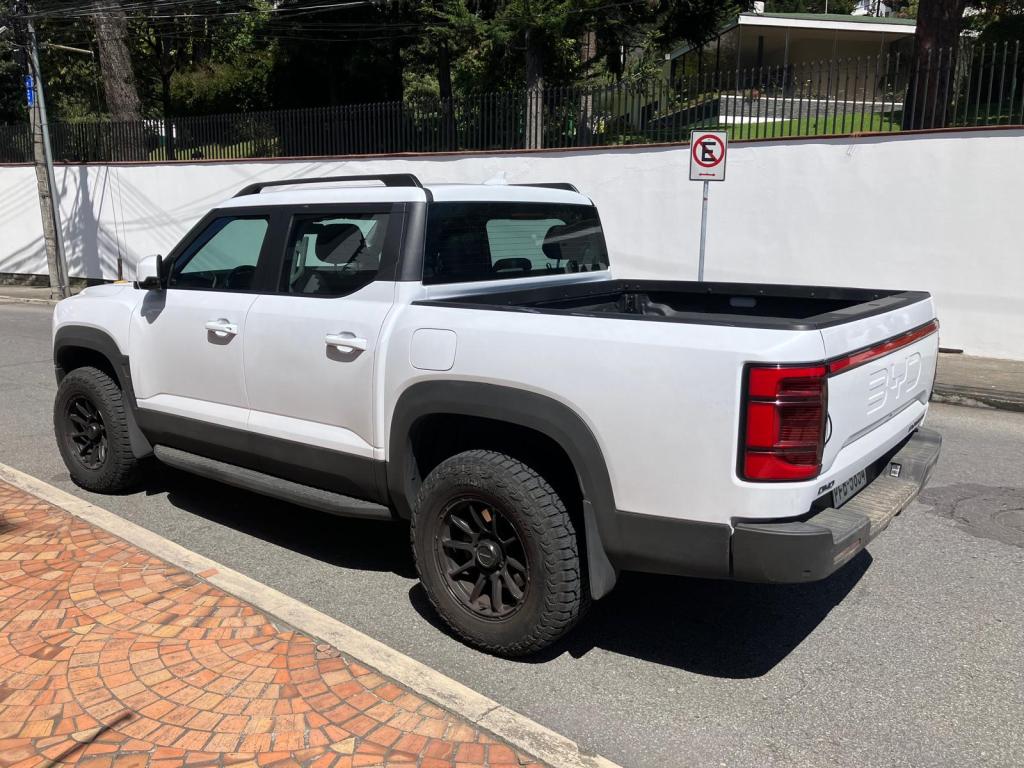
What do you think of electric cars and trucks? I didn’t realize moving to Ecuador would give me a cutting-edge vantage point to what is happening in the world of electric vehicles. By not owning cars anymore, I get to sample many electric offerings through rideshare programs like Uber. (Above: BYD Shark EV pickup, definitely not an Uber.)
It’s a challenge to determine how many different makes of EV’s are available in Ecuador, because not all of them you see on city streets are part of an official presence here by manufacturers. A glaring example of an unofficial presence are Teslas, which are rare but which Ecuadorians have managed to import to Quito and other cities.
Ecuador is making things happen with electric vehicles, while in the U.S. it appears the government is waiting for coal-fired cars to become a thing. Since 2022 EV sales in Ecuador have surged over 400%!
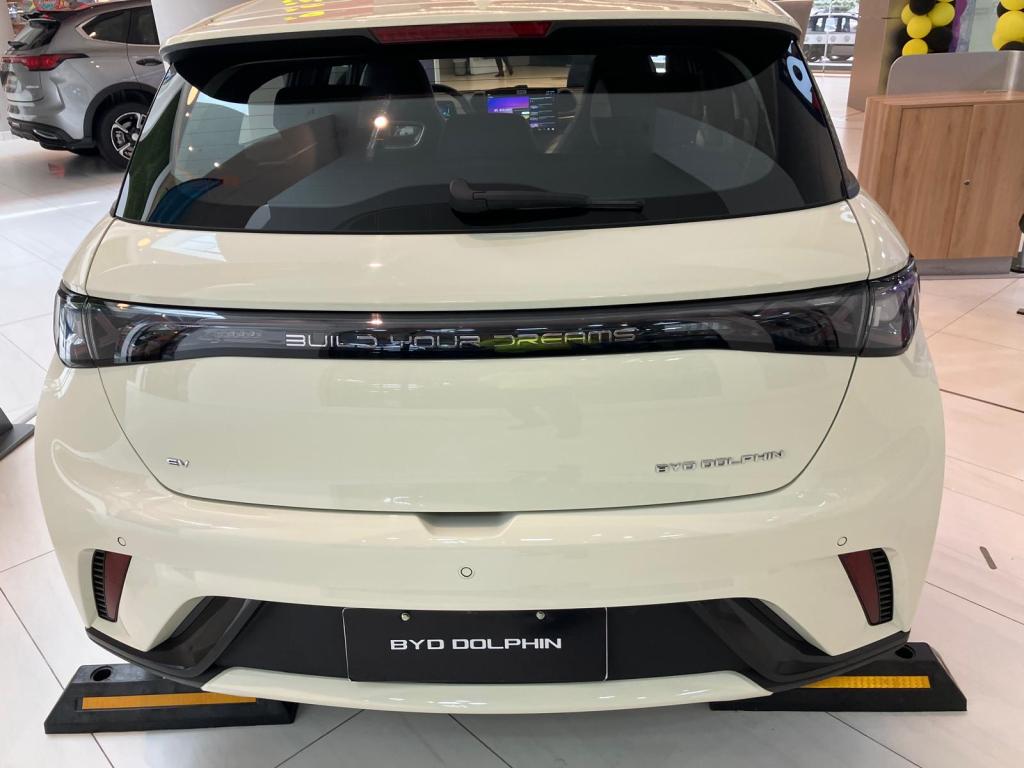
In the highlands, EV’s have a huge advantage over internal combustion engine (ICE) vehicles. At Quito’s high elevation of 9,350 feet, an average ICE vehicle loses approximately 30% of its total available horsepower. Meanwhile EV’s are unaffected by elevation. Another advantage: the year-round temperate climate of Quito is every EV’s dream!
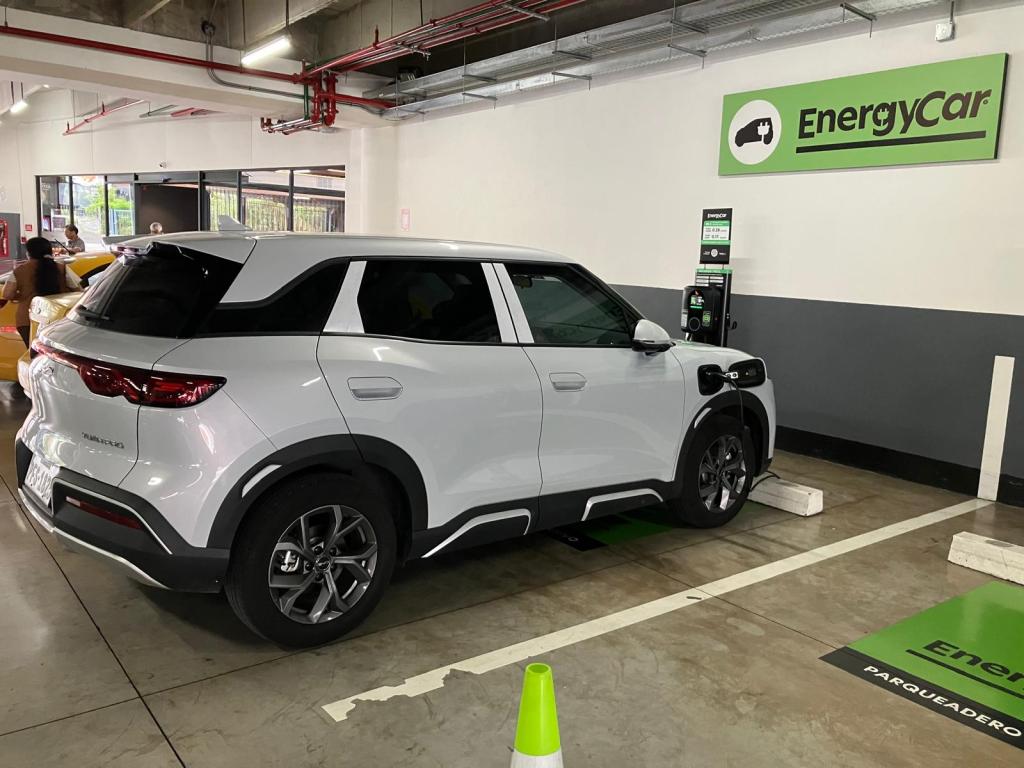
While EV use is exploding in Ecuador, public charging infrastructure in cities, towns, villages and rural areas is lagging. (Below: BYD charging up at a public station at Supermaxi supermarket.)
My own EV background started 12 years ago when I retrofitted my commuter bicycle into an electric bike by installing a front wheel motor and components and attaching it to a lithium battery, giving it a range of 20 miles and a top speed of around 20 miles per hour.
My experience owning and operating an EV for eight years was emphatically positive.
In 2017 we purchased a used 2014 Fiat 500E with fewer than 7,500 miles for $9,000. We drove it 50,000 miles before selling it for $2,000 less than the purchase price. The electrical cost per mile came out to three cents. Our total non-electrical expenses (not including tags/tabs/insurance and the radio aerial scraped off the top in a garage-door incident) were less than $2,000 over eight years of ownership. The car was a total winner and is still being driven and enjoyed.
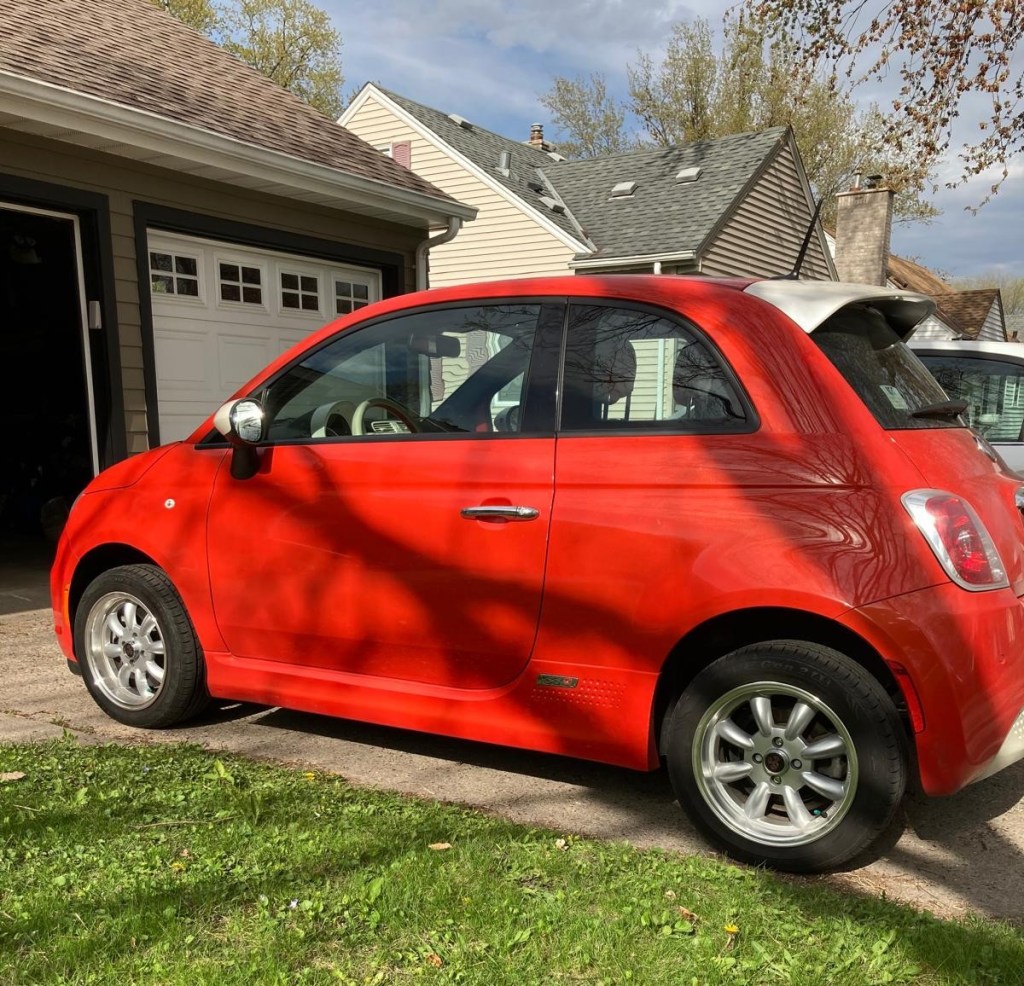
The Fiat was already comically depreciated by the time we purchased it and it retained its value – and even appreciated at times. The appreciation was the result of the U.S.-derived 500e being exported in large numbers to Europe during years when it wasn’t available there, making them even scarcer in the U.S.
My research shows that there are currently 36 major EV brands selling in Ecuador. [Nothing in this article has been independently fact-checked. – Ed.] This does not include cars with no official dealers that are imported through specialized enterprises in Quito and Guayaquil. If Tesla wants to land in Ecuador it will face huge competition from Asian-based brands already here offering superior products at far lower prices.
Here is a list of the EV brands I’m aware of in Ecuador, particularly in Quito where we live:
- BYD (largest EV seller in the world)
- Chery (Eq7)
- KIA
- Hyundai
- Genesis
- BJEV (Beijing EU5/EU5 Plus)
- Ambacar (DFSK, Soueast)
- Avantier
- Dongfeng
- Lynk & Company
- Leapmotor
- Skywells
- JAC
- MG (now a Chinese manufacturer)
- Neta
- Jinpeng
- Voyah
- Geely/Zeekr
- Zedriv
- Changan
- GM/Chevrolet
- Honda
- Volkswagen
- Renault
- Peugeot
- Opel
- Nissan
- Toyota
- Volvo
- BMW
- Mini
- Maserati
- Mercedes
- Audi
- Lexus
- Porsche
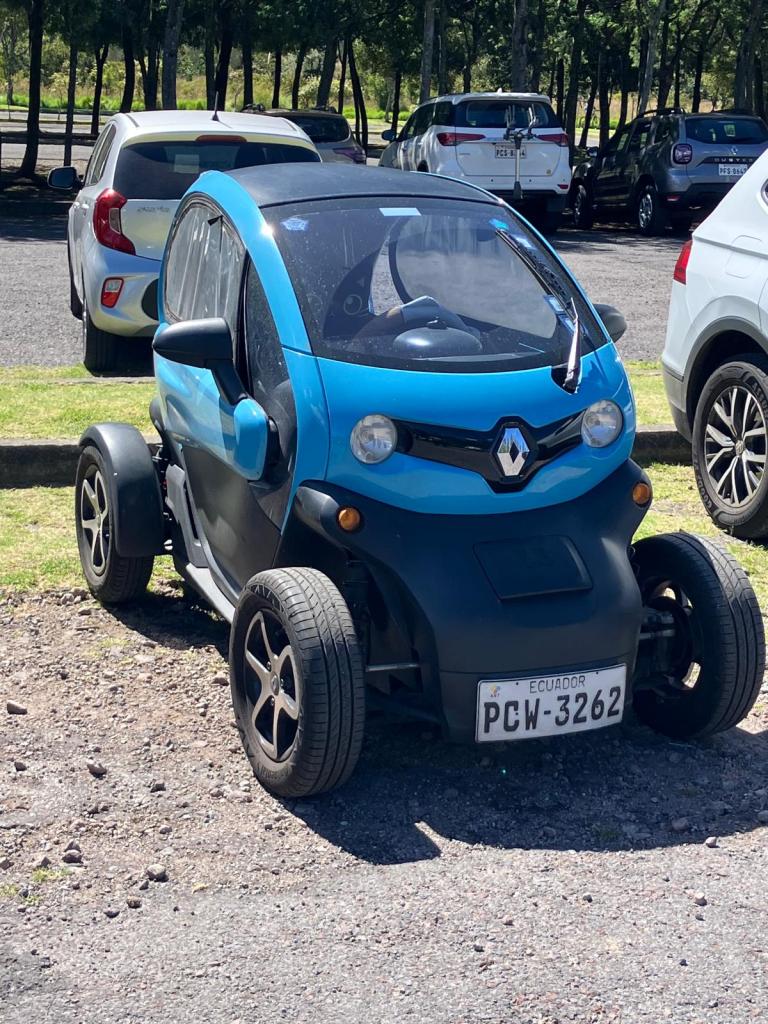
Renault Twizy spotted in the wild.
My research also shows there are 31 major EV brands being sold in the U.S., even with the U.S. embargo on the Chinese EV brands that dominate the rest of the world market. That might seem encouraging, but shockingly of these 31 brands at least 18 are cancelling, scaling back or delaying their EV plans due to slowing demand and lack of support from the U.S. government. This is the opposite of what is happening in Ecuador.
In Quito we ride in many makes of EV’s when we use Uber: BYD Dolphins, Ambacars, Leapmotors EV’s and at least one JAC EV. (Uber has many other brands of electric hybrids but I’m not discussing hybrids in this article.) I can honestly say that all the rideshare EV’s have been great: plenty of power for Quito’s Andean terrain, splendid interiors, awesome displays and stylish exteriors. They really just blend together unlike some of the ICE Ubers, which are sometimes loud and underpowered.
When asked about their Uber EVs, the drivers/owners uniformly voiced their approval of having EVs to drive.
The lowest priced EV’s in Ecuador start at around $9,000 – unlike in the U.S. where the lowest priced EV starts at $29,000!
There are many government perks for EV buyers in Ecuador – unlike in the U.S. where federal EV subsidies have expired.
Here is a list I found of current Ecuador EV benefits/subsidies:
- Value Added Tax (IVA/VAT): 0% (Exempt).
- Import Duties (Tariffs): 0% (Exempt).
- Special Consumption Tax (ICE): Exempt.
- Annual Property Tax: Exempt.
- Registration Fee (Matriculación): Reduced to a flat $10 fee.
- Import Tariff on Parts: 0% on electric vehicle components
- Circulation Restrictions: In cities like Quito, electric vehicles are exempt from peak-hour driving restrictions and license plate bans.
- Power Supply: Subsidies are available for installing home charging sockets
I am envious of the EV drivers I see all over Quito. To me they are enjoying the good life. They are accruing the benefits of living in a place where the EV is seen as a social and environmental benefit.
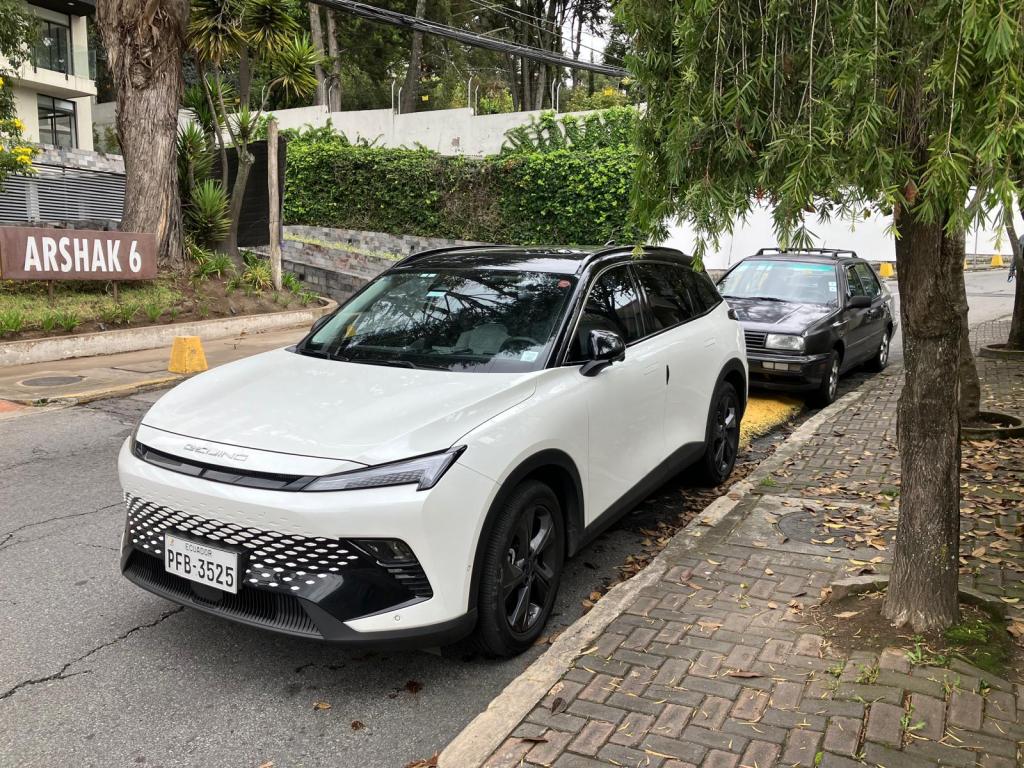
The Beijing EV pictured here is manufactured by BAIC of China. Very pleasant contours for a large SUV.
———


Leave a Reply