

Someone somewhere has surely set down the stages of voluntary immigration. An early stage might be labeled absorption: the first several weeks or months in a new country when you’re immersed in the tasks at hand.
A later stage is amazement or, more honestly, self-satisfaction. You’ve taken the first steps to build a new life in a new place. You’re learning your way around and can chat a bit, occasionally making a taxi driver laugh; whether it’s with or at you doesn’t matter.
There are likely several end stages of immigration. One, of course, is returning to your country of origin, an option my ancestors mercifully didn’t act on after coming to the U.S. (although my Aunt Jo wished to the end of her 99 years that the family had not left Holland).
Another end stage, as with grief, is acceptance: it’s not easy, but this is what you’ve got. If all goes well, I imagine an end stage of contentment: a comfy place to live, a group of friends, a routine, ever-decreasing pangs of loss.
We have had the privilege to be able to leave our home country and be welcomed into another. We are also privileged to have an income (for now), based on having worked in the U.S. for some 100 years between us. Bill had the further privilege of being born to providential parents, prime exemplars of the Greatest Generation.
The contrast between our situation and that of so many Americans, like those we saw in a PBS report on people in their 70s and 80s who have to work to live, is never too far from our minds. Plenty of Ecuadorians are in the same boat. As I have observed about another major event in our lives, we are lucky to know how lucky we are.
And yet.
I have the human capacity to get cranky.
I am in the stage of voluntary immigration, which I presume others face, that might be called over it. Nothing is novel or charming anymore, and almost everything is still a hassle.
Losing a phone is made exponentially worse by having to go to banks in person to change the local phone number on your accounts. You didn’t need a new phone number, but you couldn’t speak the language well enough to find that out from the cell phone people, who were happy to sell you a new eSIM.
Your landlord increases your already-high (for Quito) rent by 20 percent. Buildings with pools and gyms and saunas and steam rooms and jacuzzis rent similar apartments for less than you now pay in a building whose sole amenity is underground parking – and you don’t own a car. There’s a lovely view of the city and a few volcanoes, but it’s from the bedroom. You don’t want to move but it would be spendthrift not to.
You feel an absurd, renewed longing for your own things, the things you collected over decades and left in the states, in the homes of neighbors known and unknown. You even find yourself resenting your kid, who at 23 is using (or not) the household goods it took you forever to curate.
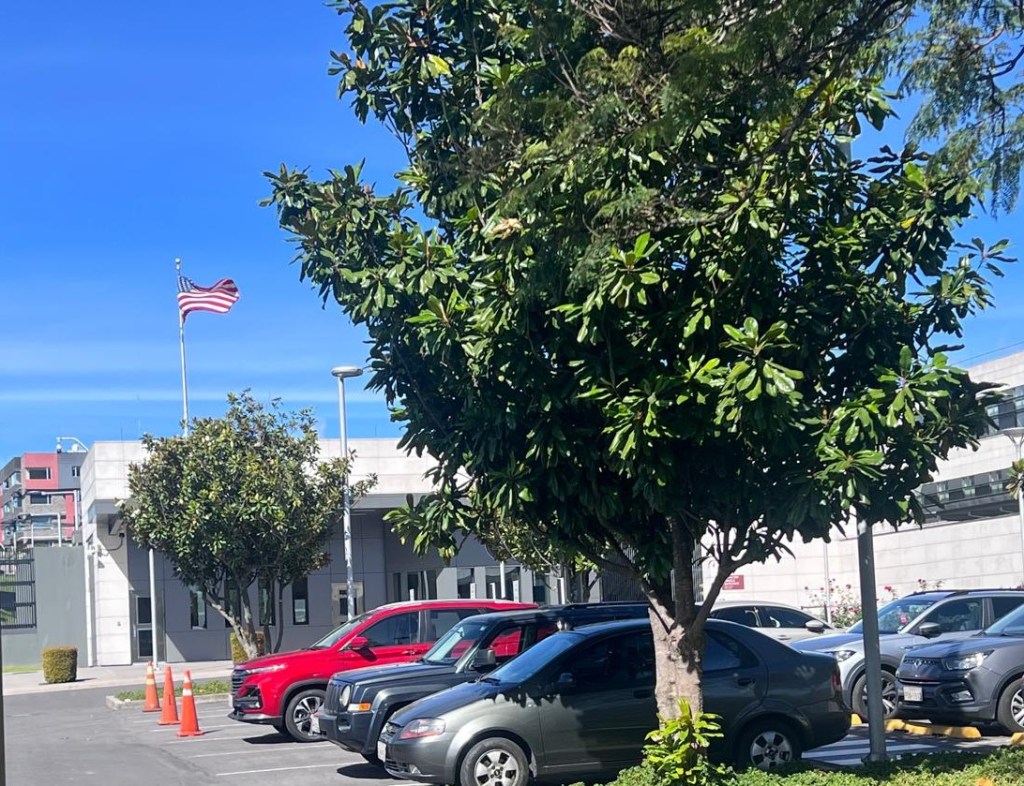
Getting a legal document notarized requires a trip to the U.S. embassy, $50 per signature and your own witnesses (should your document require them). The embassy is immaculate, closely guarded, filled with Ecuadorian employees, and you are the only gringos there.
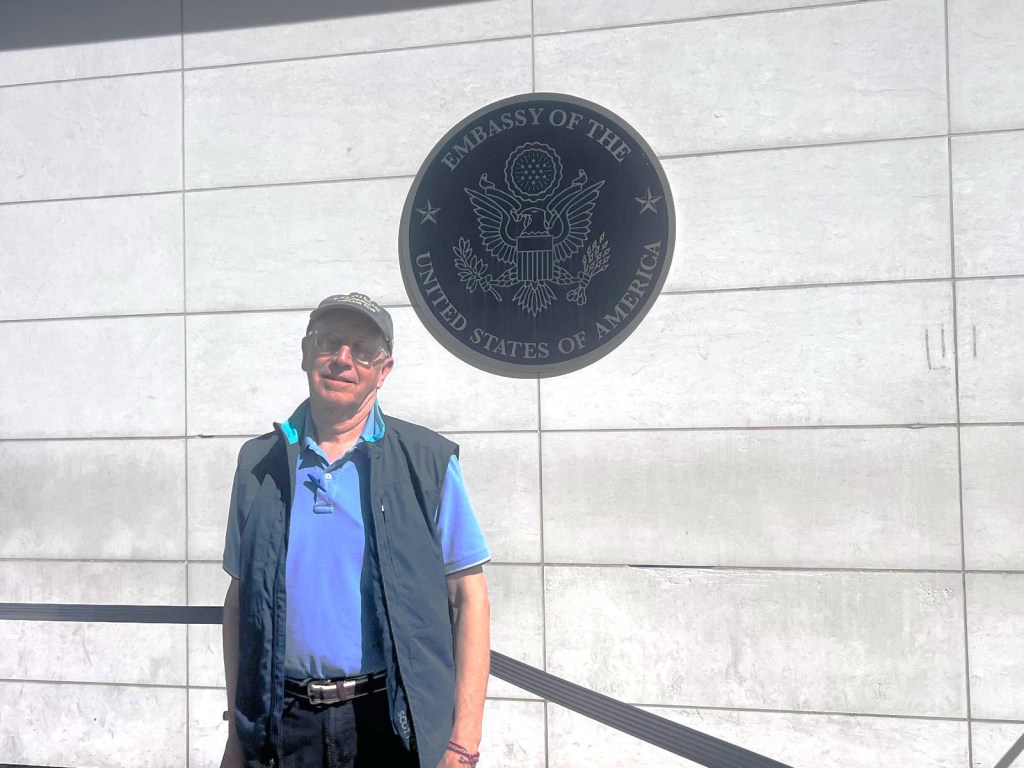
The waiting area runs a video with lovely scenes from picturesque states: Florida, South Dakota, Alaska. A small herd of buffalo ambles across a highway. A bear catches a salmon going home to die. No ICE raids or memorials to gunshot victims. America, the beautiful. You are curious about the waiting Ecuadorians, speaking in hushed tones, with their children. Some have American passports, and you wonder if they’re going back and if they’ll be okay.
You wonder why you thought it was a good idea to jettison so much, and to bring so little with you. You wonder if the moments of catharsis when the stuff went away were worth it.
You wonder why you live so far from your only child, the one you waited 43 years to have.
Then you watch the news, and you remember.


Leave a Reply