
We moved to a new apartment in a different part of town, east of our previous place, in September. We now live in Cumbaya, my Lord.
We had ruled out this area early in our immigration journey because of the large number of gated communities and apparent need for private transportation. (Our friend Heather, originally from Minneapolis and now living in southern Ecuador, calls it “the Wayzata of Quito.”) But bicycling is Bill’s main thing, and Cumbaya is home to the entrance for the Chaquiñan Trail. We decided, for that reason among others, it might be a wise move. Living here would mean he could cycle daily instead of only on Sunday, when Quito Norte closes a few streets for the Ciclopaseo.
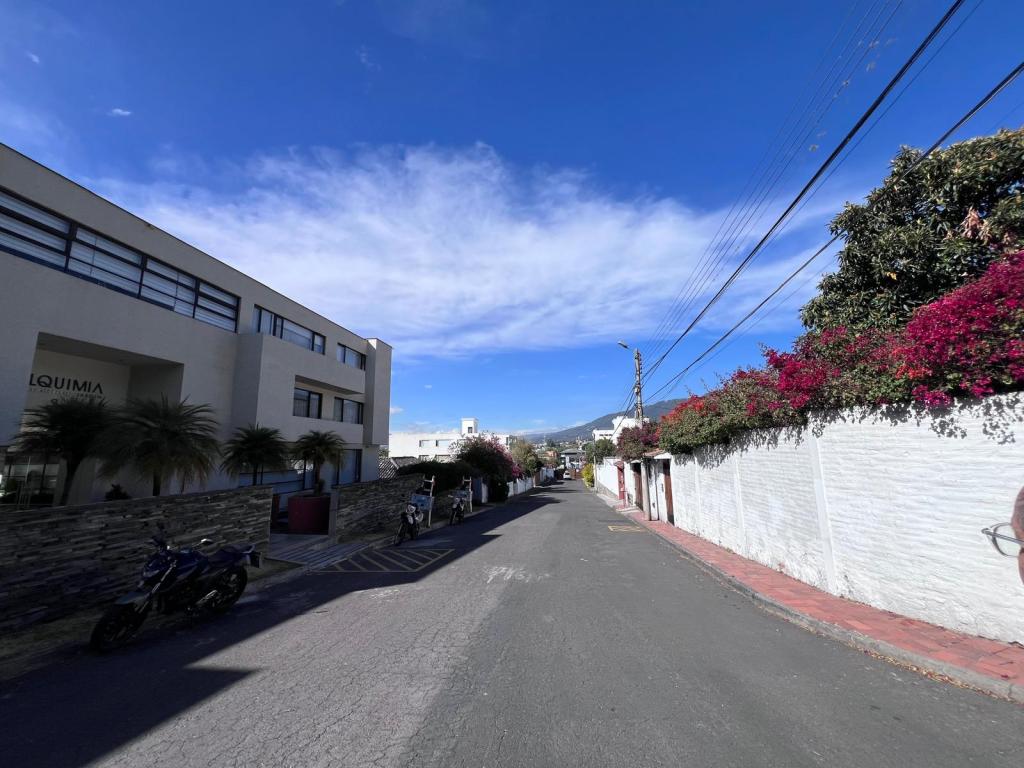
We now live in a textbook example of suburban sprawl, with tons of apartments and townhomes and single family units, most with walls built around them. Discrete commercial hubs operate blocks or miles apart from one another. Still car-less, we needed to be near at least one of those hubs, and of course we needed to be near the Chaquiñan. (Photo below is our street; we live at the far end. Walls are an important feature here and many have broken glass embedded on the top.)
We looked at places in the Yoo (pronounced YO) development, apartments that were new, smallish, cold and colorless. Sparkling amenidades included a comprehensive gym and heated outdoor pool, along with a coffee shop and sushi restaurant (what else) just steps away, but there was no place for the dog to run.
We also looked at places in the Aquarela, a dark, dystopian horror of a megabuilding that no number of amenities – pool, ice rink, handmaids’ lounge – could disguise. Note to architects: a building designed to flaunt lush plants cascading over every exterior balcony is a lovely idea and reads real sweet in renderings . . . and looks like holy hell in reality when much of the place stands vacant and the plants are dead.
We hoped to find another furnished apartment, but they are hard to come by anywhere. Also, we had grown weary of other people’s (lack of) color choices.
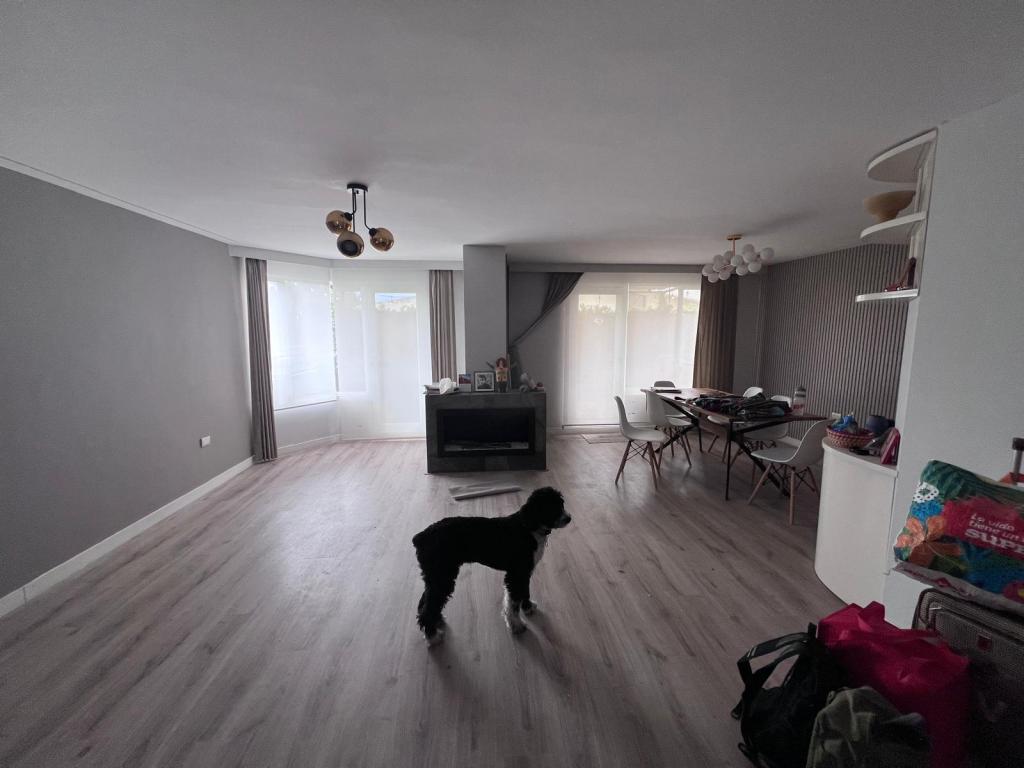
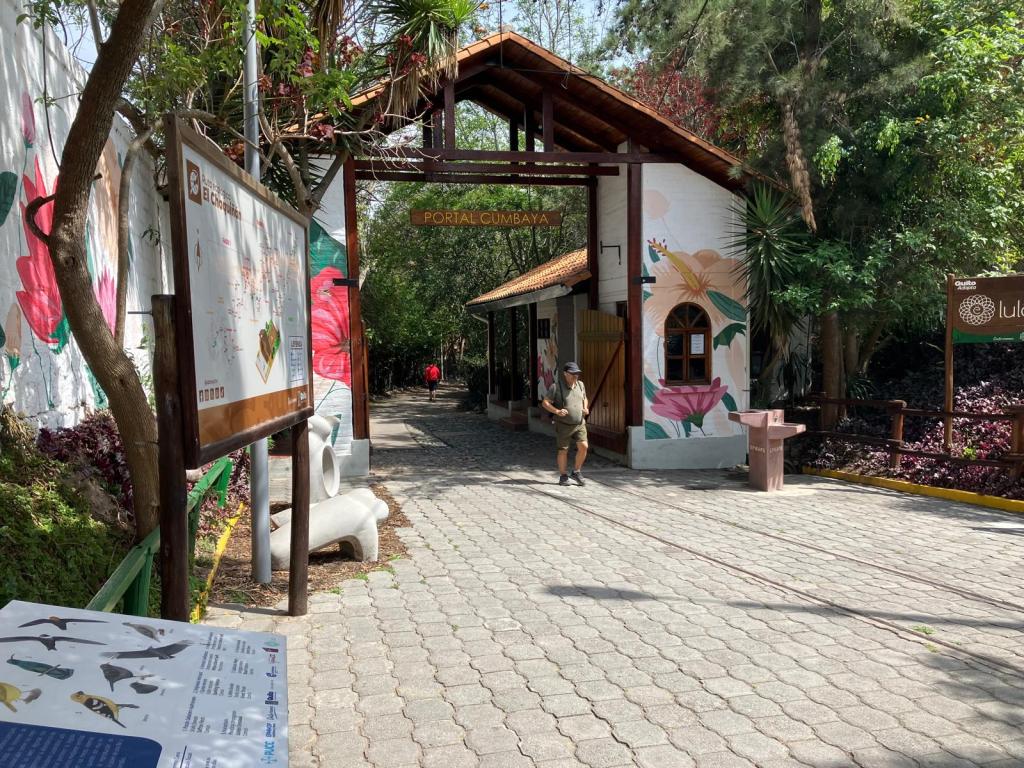
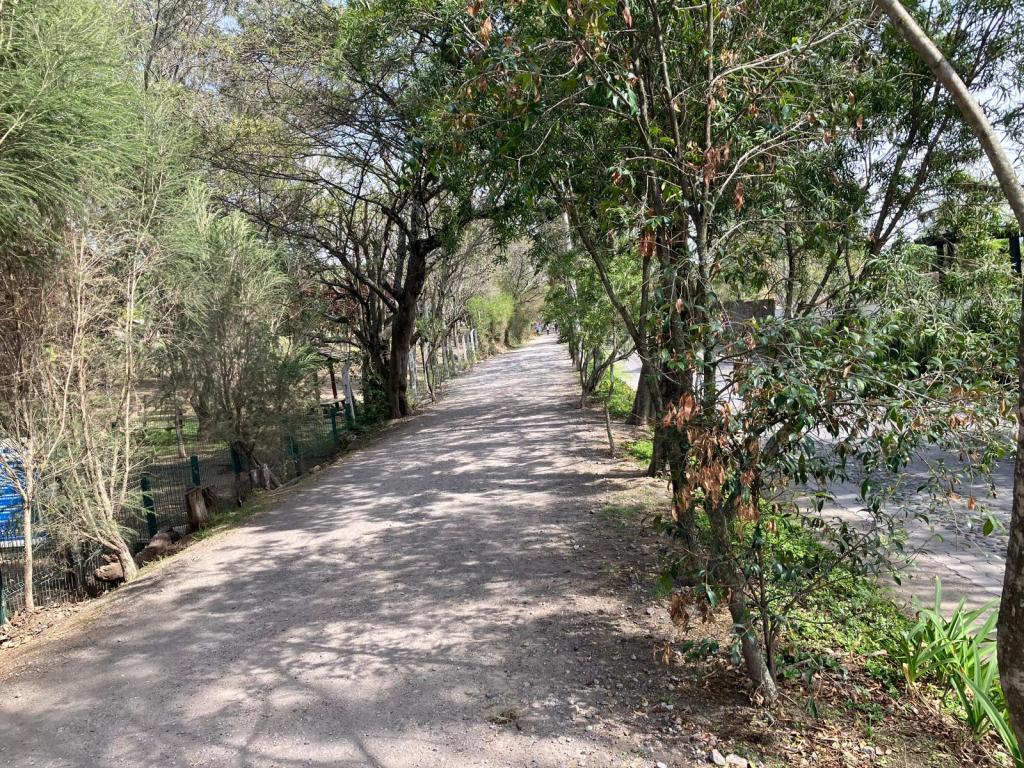
Then our dog trainer Marisabel sent us a Facebook Marketplace listing for an apartment in an urbanización (essentially a big neighborhood with a wall around it) near a college, with all the usual college-y establishments for food and drink nearby. It was unfurnished, had no major appliances, and was totally beige down to the laminate floors – and we were smitten. Yes, it’s gated, and one of four guards lets us in and out. (Photo below is the entrance to the bike trail.)
We love our apartment. The dog’s short pit stops now take place in a green area abutting the underground parking garage: real grass and soil, not astroturf as in the old place. We have an uncovered terrace that gets sun.
The elevation here is at least 2,000 feet lower than our previous place, and this makes for many differences. The potted plants I tried to nurture at 9,300 feet are doing better here; the plumeria is leafing out again, and the bougainvillea is getting ready to bloom. Hummingbirds visit.
Also, we have more bugs
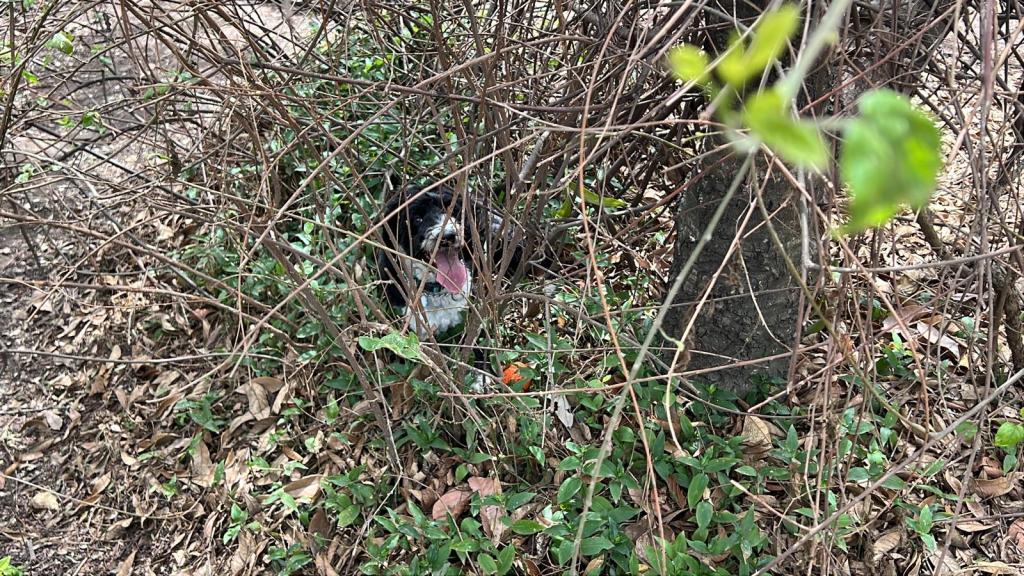
On the other side of the apartment from our terrace, we have a covered “pergola” where Bill keeps his bicycle. We could grill out there, if we had a grill. We have considerably more space throughout, windows on three sides instead of two, and a tv room separate from the living room. Picture windows in the main bedroom and tv room overlook a valley with the Andes beyond. Most wonderful, an enormous park runs throughout the urbanización, and there Bella can fetch to her heart’s delight, ducking into thickets of shrub when she gets tired. We see bright yellow and red birds here too.
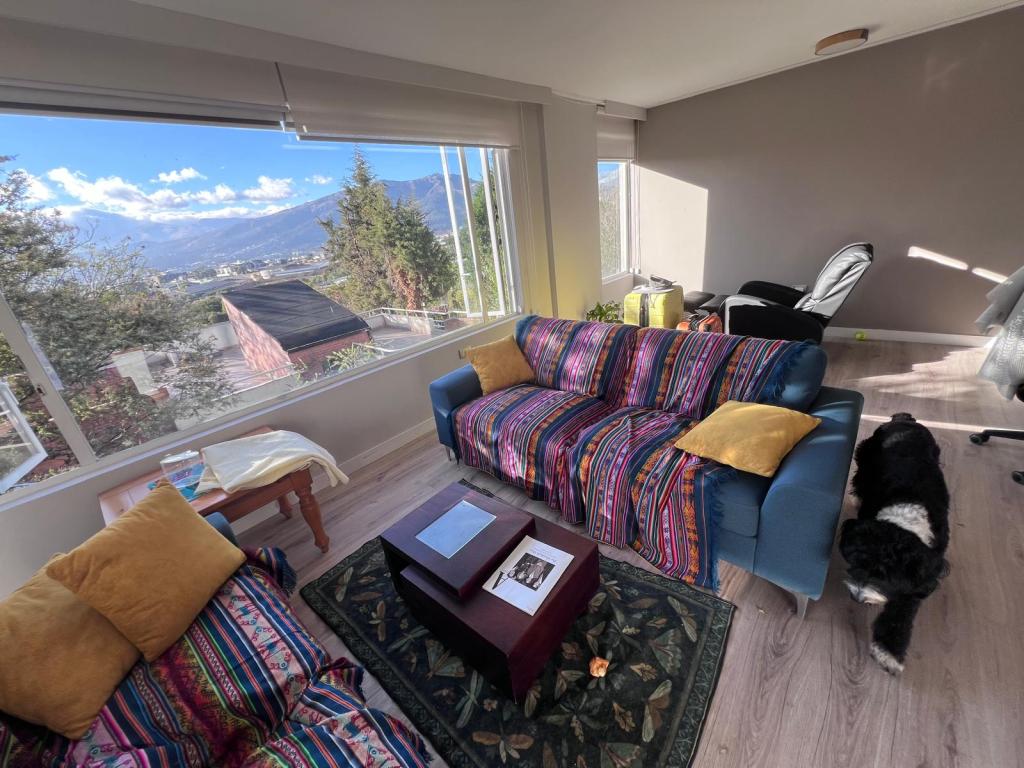
Yes, we had to buy appliances and furniture, but apart from the expense, that has been a good thing. Turns out I feel more at home with my own stuff around, even cold metal like a fridge and washing machine. As to furniture, we haunted FB Marketplace and found two worn-out sofas; we also connected with two Latin American employees of the American Embassy in Quito, who were downsizing from an enormous house nearby and sold us several pieces.
Is everything perfect? No, but at least nothing is beige or gray. Having sofas reupholstered here costs maybe a third of what it would in the U.S., and the two worn-out sofas have been rebuilt and covered in sapphire blue. (The photo below shows them in their original condition.)
In the eternal twilight gray of our last apartment, we were resigned to using dishes, flatware, and furniture we didn’t pick and wouldn’t have if we’d had the choice. This is what our gurus Amelia and JP have done, first as immigrants to Ecuador and more recently as slow travelers around the world. I wonder if, not having had children, their concept of home is different from mine. They don’t seem to care whose stuff they are compelled to use, or whether it has any true utility or aesthetic appeal whatsoever, because they’re always on the move.
I don’t want to live that way. But:
How long will we be here? How comfortable do we need – or want – to be? How much does the concept of home have to do with the physical things with which we surround ourselves, down to the color of the walls and floors? Should I try to make a real home that feels like mine in an apartment in South America, where I am still and may ever be a guest, or should I resign myself to a comfortable enough yet liminal existence in the months between visits to my kid in the U.S.?
Will all the creature comforts in the world make this feel like home?
Bill says less is more. Given the instability of the planet, he thinks we need to be ready to bug out with nothing more than the clothes we’re wearing, our passports and the dog. Even the dog, I regret to say, may be a stretch. Where we would go if we needed to bug out, we haven’t discussed. Essentially, he advises against getting too comfortable.
That applies to existence in general, I guess.


Leave a Reply